
Salesforce is undeniably powerful, but their pricing tiers make the case for open source obvious. When you are forced to scale from the basic $25/month starter tier all the way up to $175 for Enterprise, the costs add up quickly. If you select their full Agentforce AI suite, your plan costs $550 per user per month. This per-user, per-month plan can destroy your business budget. This high cost raises a serious question. So, here we are looking for the best self-hosted open source alternatives to Salesforce.
In 2026, self-hosting an open source CRM is not only an alternative, but it also gives you data privacy and customization options. If you choose a self-hosted open source alternative to Salesforce, you get 100% data sovereignty, infinite extensibility, and zero licensing fees, paying only for the server it runs on.
Here is a deep dive into the absolute best open-source CRMs available today.
Twenty
Twenty is a fast-growing, open source CRM project right now because it is actively designed to be the modern alternative to Salesforce. Its clean interface feels more like Notion or Linear.
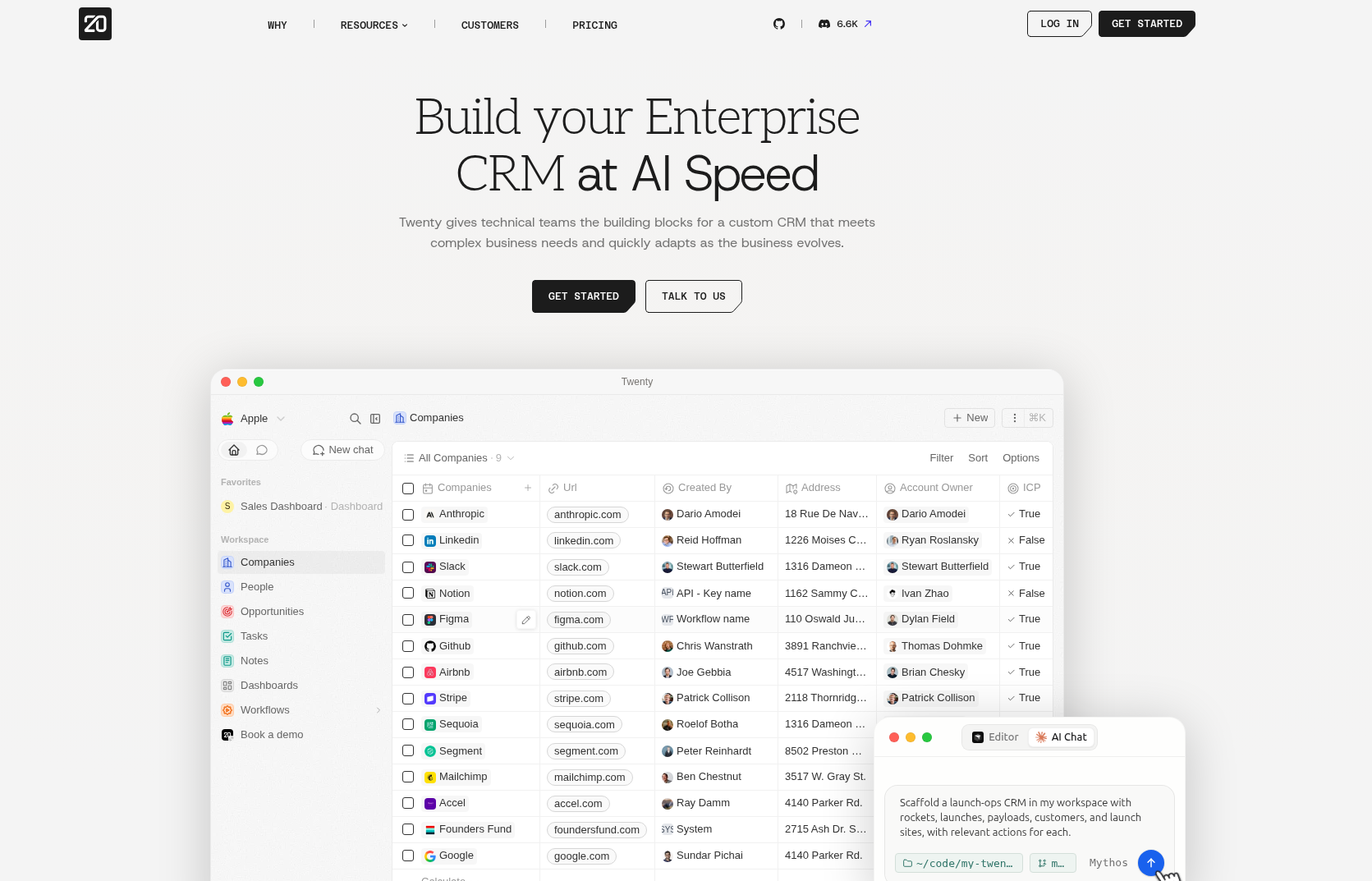
This platform is built for tech startups, developer-focused teams, and businesses that want a fast, modern system ready for AI. It uses a deeply customizable data model, and you can create custom objects via UI or API instantly. However, it is still new and evolving, it currently lacks the massive app stores found on older platforms, and does not yet have advanced business reporting features.
SuiteCRM
SuiteCRM is a powerful, enterprise-grade alternative to complex platforms like Salesforce. It is designed for managing vast amounts of data and workflows. Originating from SugarCRM, this robust system is ideal for large organizations requiring a comprehensive CRM solution.
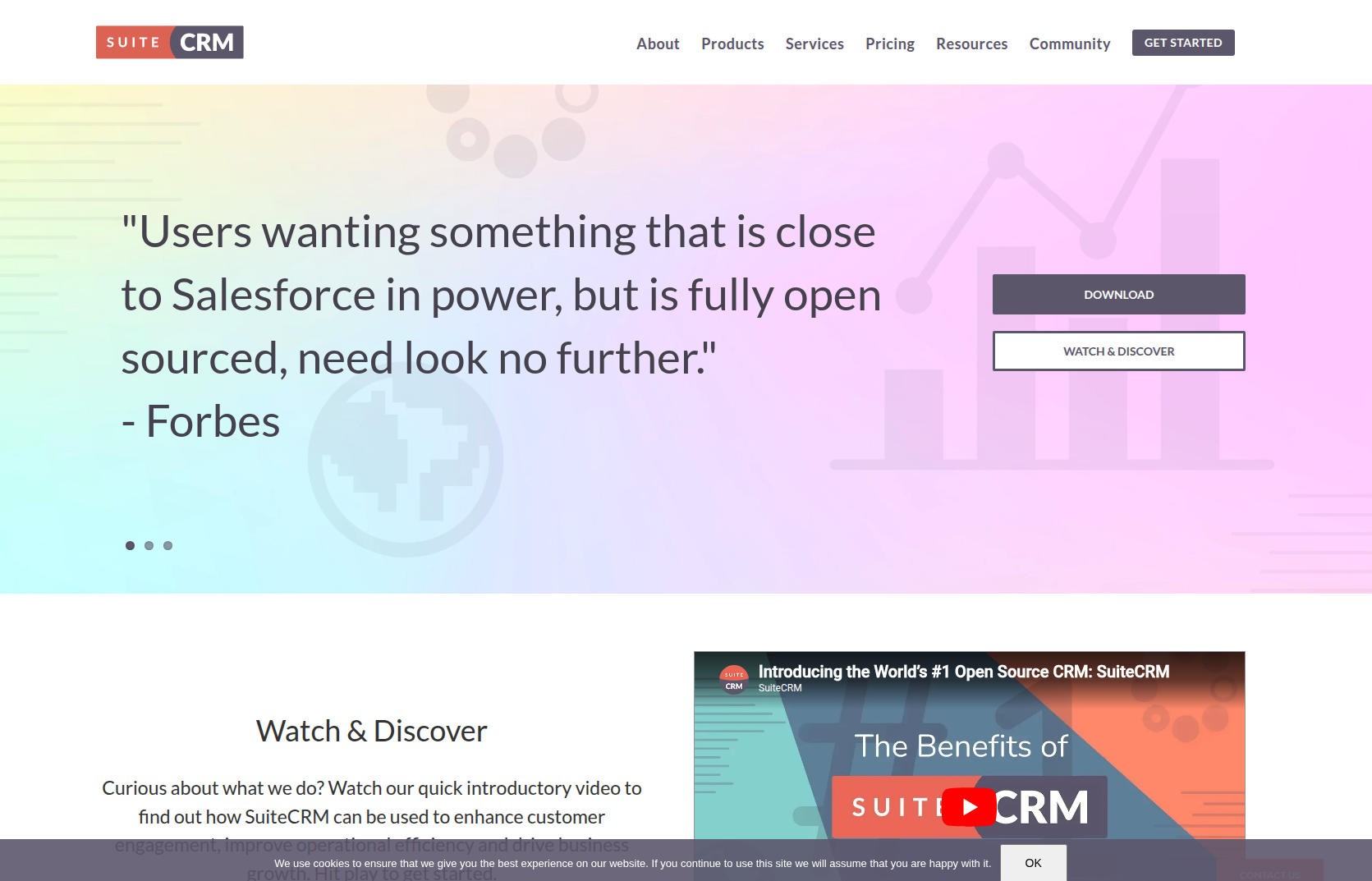
This platform is built for medium to large enterprise companies that need to manage complex sales structures, different territories, and heavy automation. It stands out because it includes excellent automated workflows and a massive community that offers many extra add-ons. However, the interface, though recently updated, still feels a bit clunky compared to modern SaaS tools. Additionally, setting it up is a major task that requires a dedicated developer or admin to get everything working correctly.
EspoCRM
EspoCRM sits right in the sweet spot. It offers a reliable middle ground by balancing stability and speed without the complexity of older software or the unfinished features of newer tools. It is a highly stable, fast, and straightforward platform that simply works well for everyday business needs.
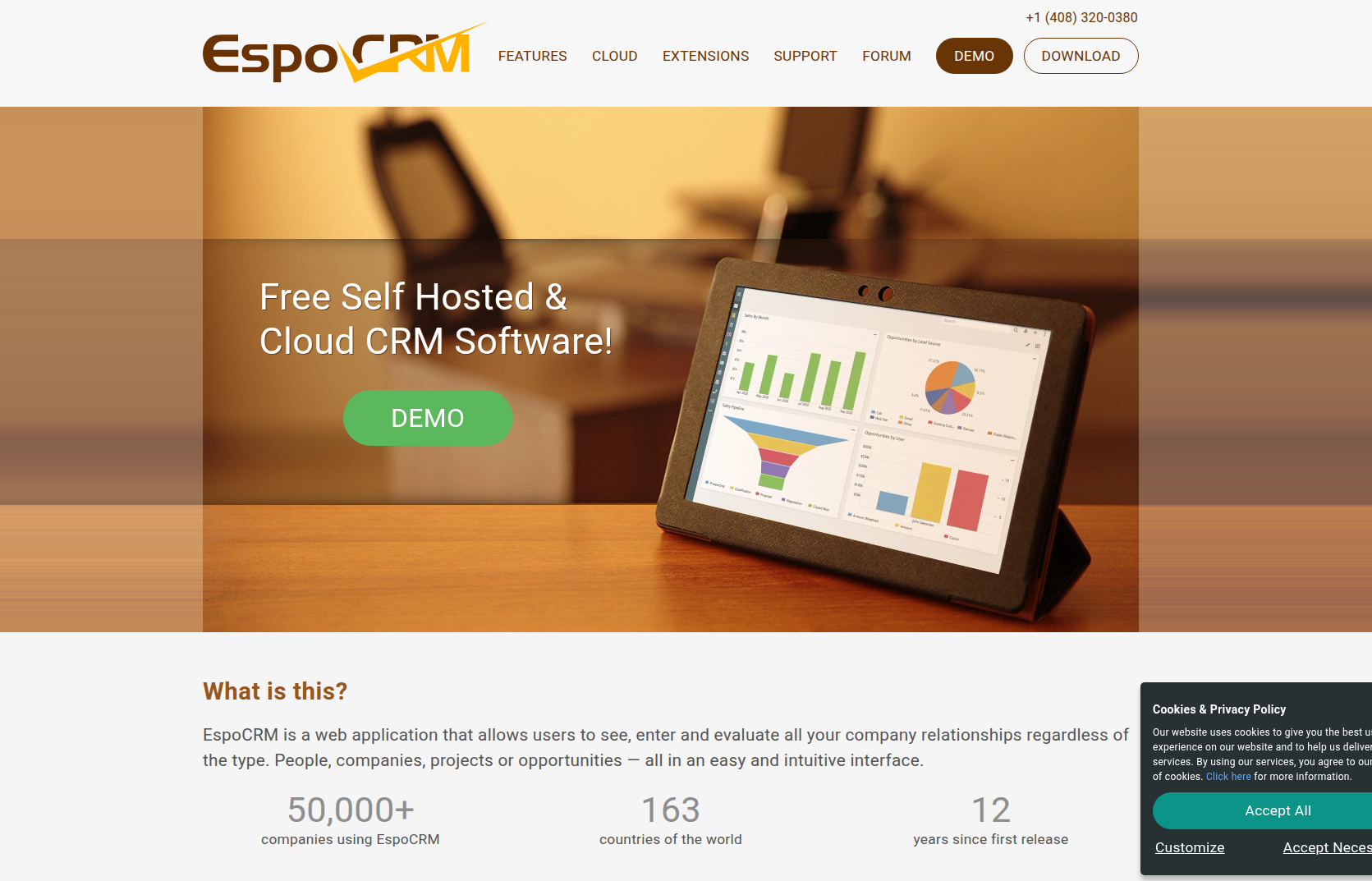
This platform is built for mid-sized sales teams that need a fast, reliable, and snappy pipeline manager with zero fuss. It stands out because it runs quickly on a single web page, connects smoothly with your existing email, and is easy to set up on your own servers because it supports self-hosting via Docker. Plus, regular users can easily change the screen layout without knowing how to code. However, connecting it to other modern software tools is not automatic, so you will need to use code or external connecting tools to make them work together.
ERPNext
If you hate Odoo's paywalls, ERPNext is your answer. ERPNext is an open source, monolithic business solution built on the Python-based Frappe framework that offers all features without charges or premium tiers.
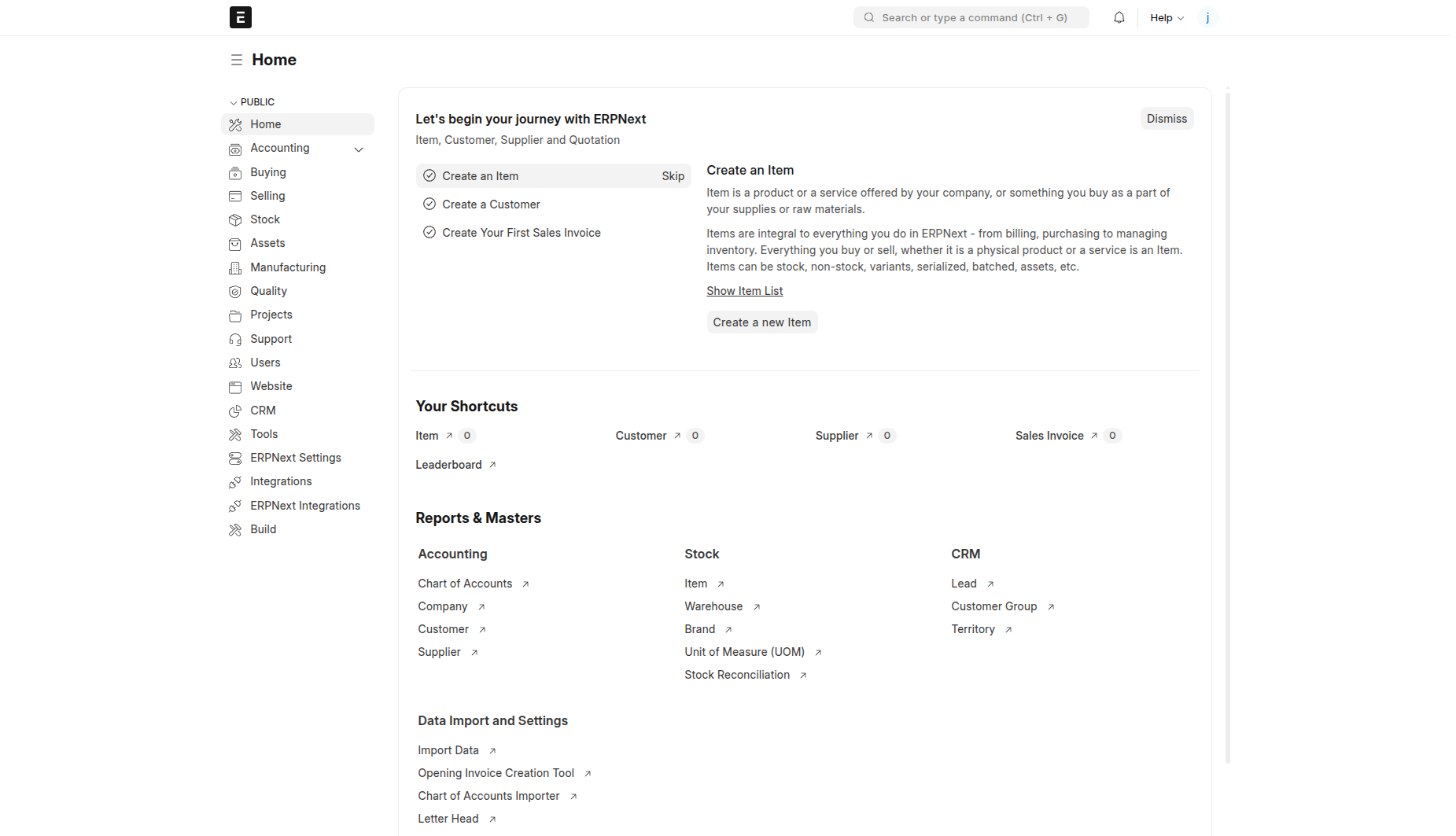
This platform is built for companies that want a complete, fully featured set of business tools including customer management, HR, accounting, and manufacturing, completely for free, provided they have the technical skills to manage it. It stands out because it offers powerful, enterprise-grade features without any hidden fees or licensing costs. However, because the system is so massive and handles everything from sales to factory operations, it has a steep learning curve and the interface can feel overwhelming. Additionally, making heavy changes to the software requires learning a specific technical framework, which is harder to master than standard web tools.
Odoo
Odoo is a huge, easy-to-use business platform that splits different tasks—like tracking customers, making sales, and managing inventory—into individual apps. You simply install the specific apps you need, just like downloading software onto a smartphone.
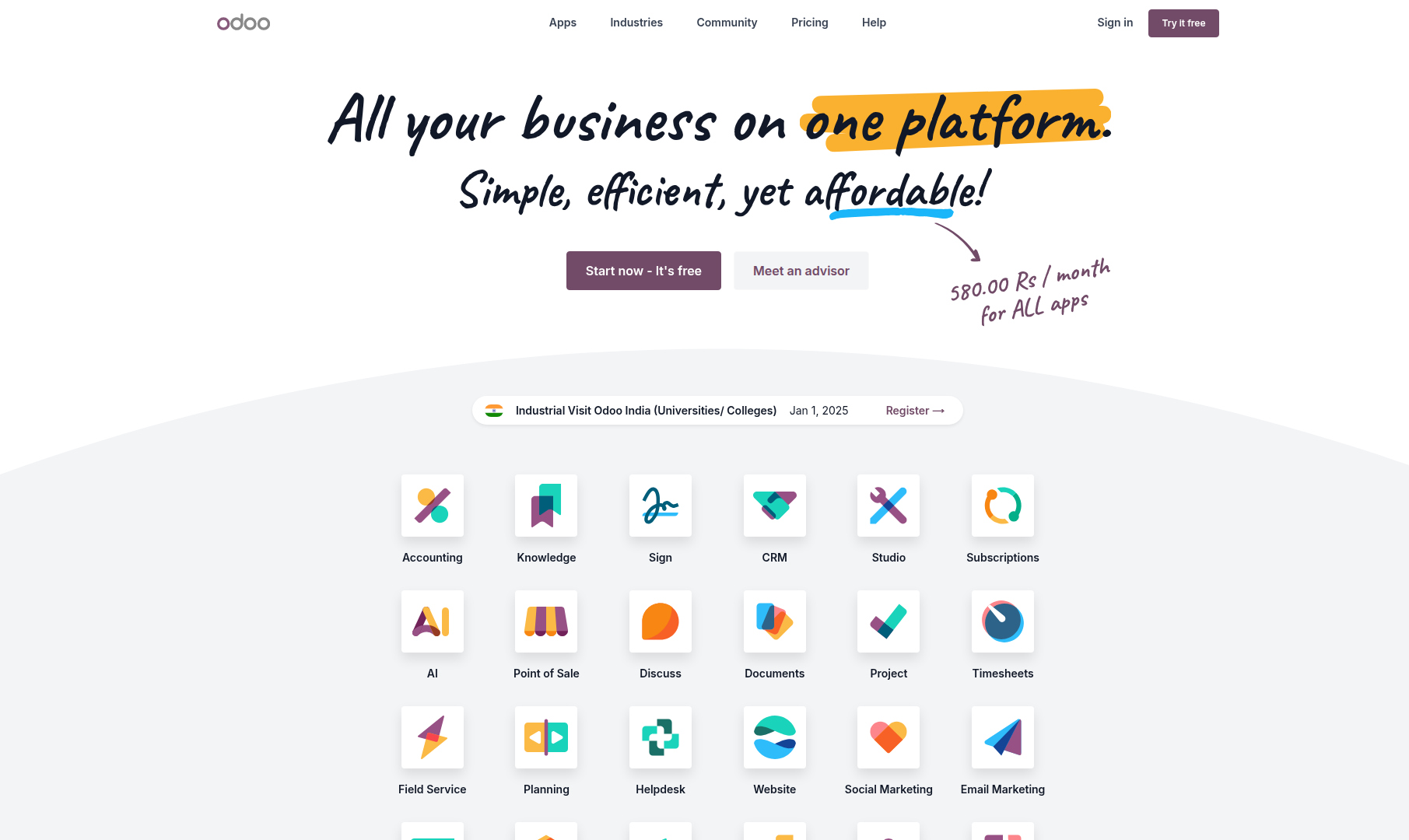
This platform is built for large companies that want a modern interface and want to start with a CRM but plan to bolt on other business apps later. Its UI is beautiful and highly intuitive. In Odoo, the Kanban view organizes opportunities by stage, and you can drag and drop them on the pipeline to move them from one stage to another. While the community edition is free, advanced features such as comprehensive accounting and marketing automation require a paid subscription, introducing a paywall for full functionality.
Conclusion
Choosing the right open-source CRM comes down to what your team actually needs and how much technical overhead you can handle. If you want a fast UI and a modern alternative to Salesforce, and are willing to grow alongside a newer product, Twenty is the clear frontrunner. For heavy enterprise workflows that need a direct Salesforce replacement, deploy SuiteCRM. If you want a rock-solid, fast sales tool that just works, go with EspoCRM. And if you want to run your entire company's operations from one database, you just have to choose whether you prefer Odoo or ERPNext. You don't need a massive Salesforce budget to build a highly effective sales machine; you just need to pick the right self-hosted foundation.
