
In the modern day, all business owners want data privacy and full control over their own data. Google Analytics provides the best service, but it does not give you data privacy or full customization, and it also generates cookie pop-ups, which can be irritating. Google Analytics GA4 standard is free, but Google Analytics 360's annual charge is $50,000 - $150,000+. So it is time to move on to an open-source tool.
If you want to grow your business without any ads, without any monthly subscription fees, and with full control over your own data, then choose open-source tools. Here we give you 17 self-hosted open-source alternative tools to Google Analytics. Many people are moving away from Google Analytics and selecting one from the 17 options below.
Umami
Umami is open-source software under the MIT license. It is a Next.js and Node.js web analytics tool that serves as a simple Google Analytics alternative.
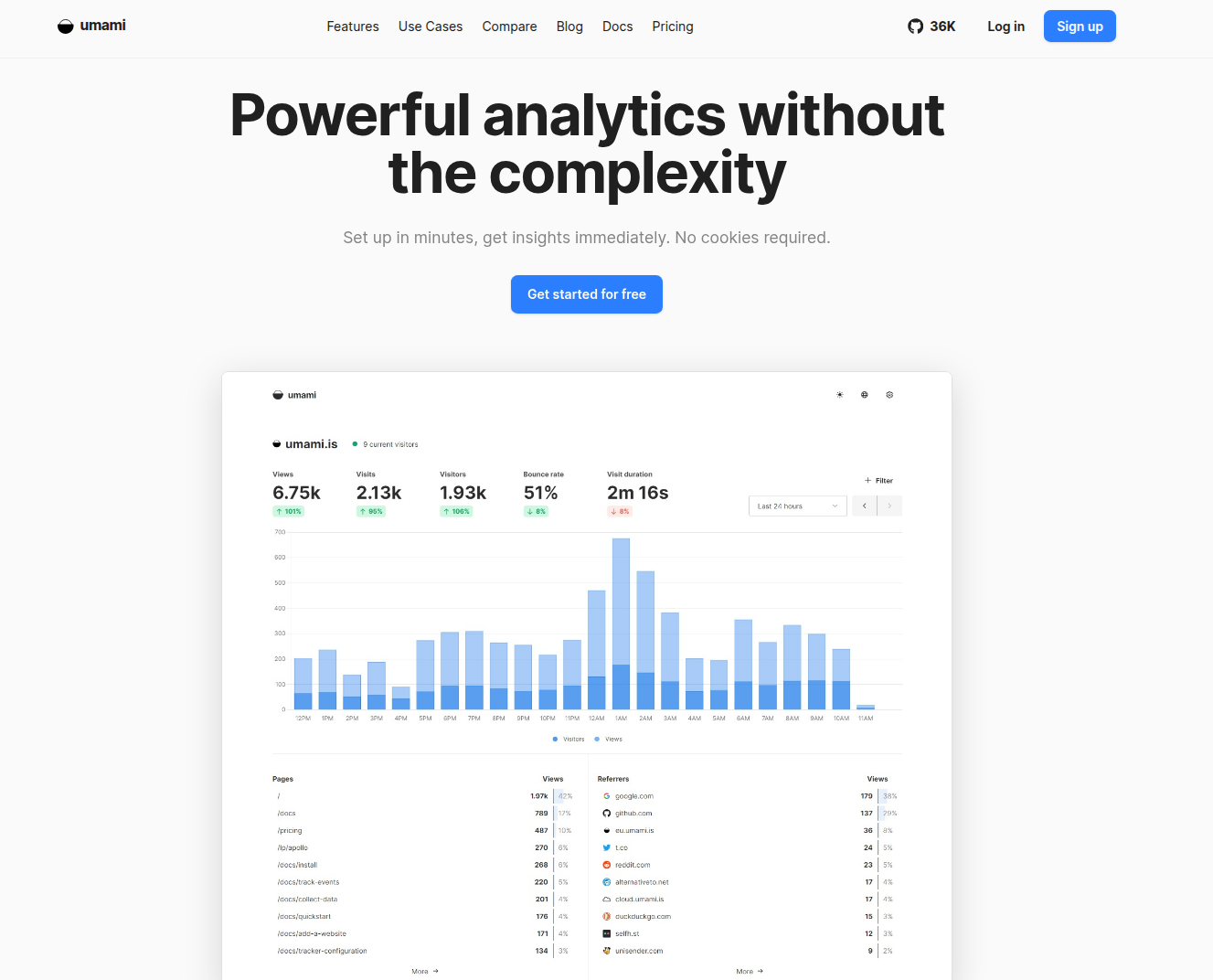
Umami is a well-organized, privacy-focused web analytics platform that combines event tracking — like clicks and form submissions — and session replays onto a single dashboard. That means this tool tracks all activities in one place. This tool traces user journeys and the exact path visitors take through your site.
PostHog
PostHog is a robust, ClickHouse-backed analytics platform designed for scaling SaaS and web applications. It is built on a Python and TypeScript stack. It is a powerful alternative to GA4 and Mixpanel for core web analytics.
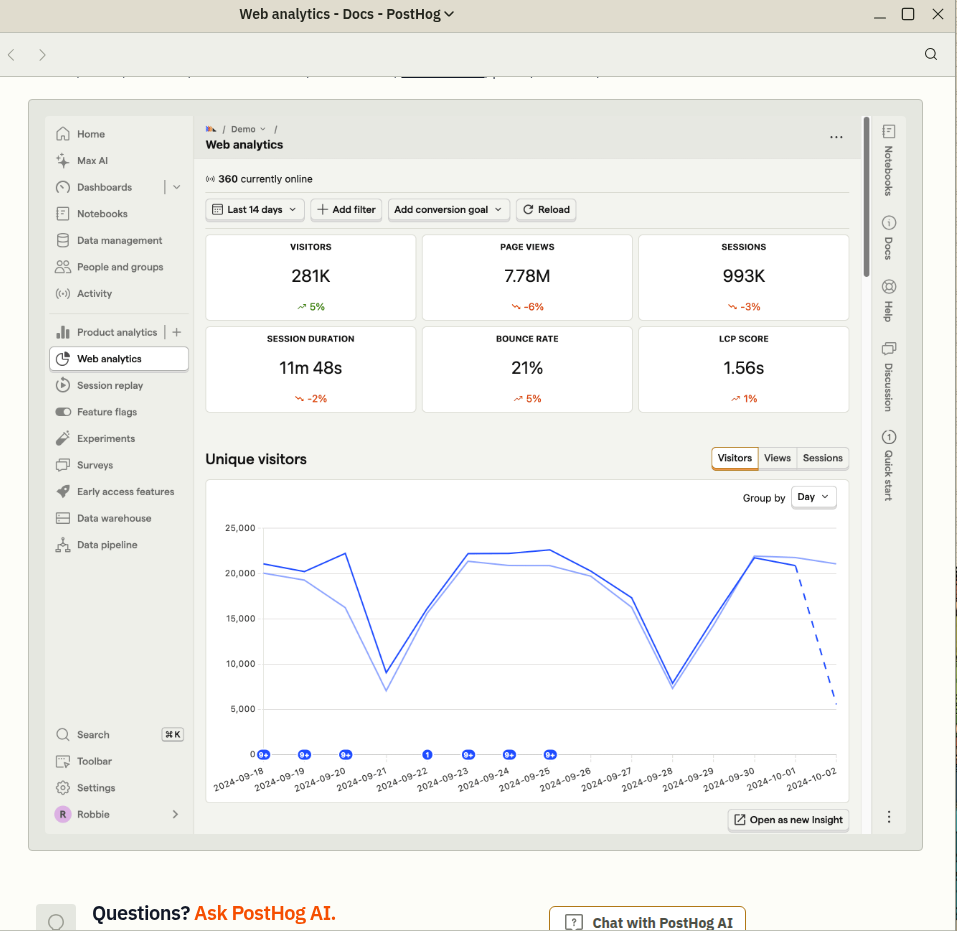
PostHog is an open-source tool that serves as an alternative to Google Analytics. It is available under the permissive MIT license. This platform is designed for scaling SaaS and web applications. It is built on a Python and TypeScript stack.
Plausible
Plausible is a lightweight open-source analytics tool. It focuses on web metrics, conversion funnels, and referral tracking. It is an ideal choice for compliant, simple content tracking.
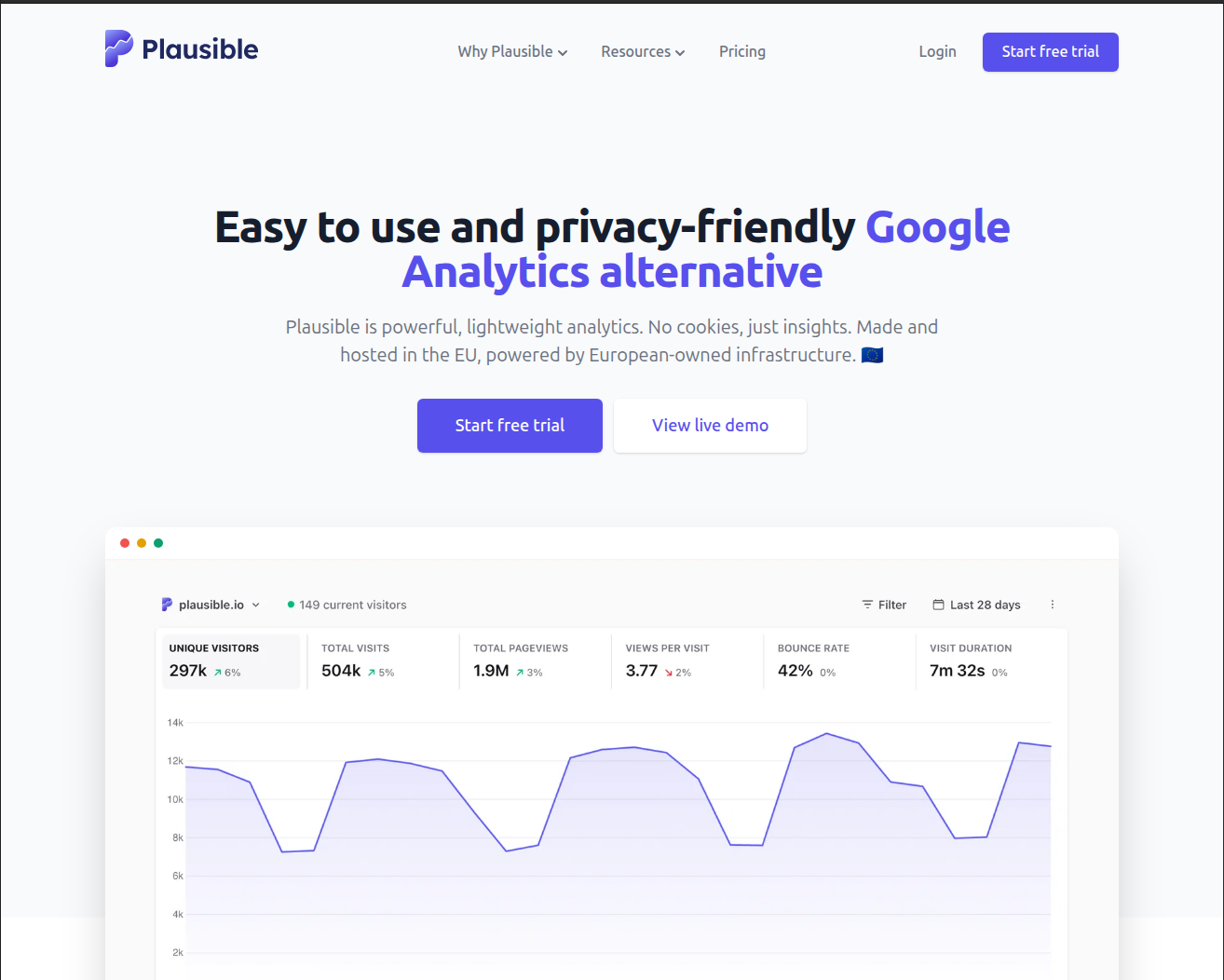
Plausible is an alternative to Google Analytics. There are no cookies and no cross-site tracking. It provides clean traffic stats. It is the best way and the go-to choice for content sites. You can run it via Docker. To run the self-hosted Plausible Analytics Community Edition (CE) on Docker Compose, you need a server with an x86_64 or arm64 CPU.
Matomo
Matomo is a self-hosted open-source tool that serves as an alternative to Google Analytics. It acts as a powerhouse for robust, privacy-first data tracking. Using a PHP and MySQL/MariaDB stack, it gives developers and businesses full control and ownership over their raw website data.
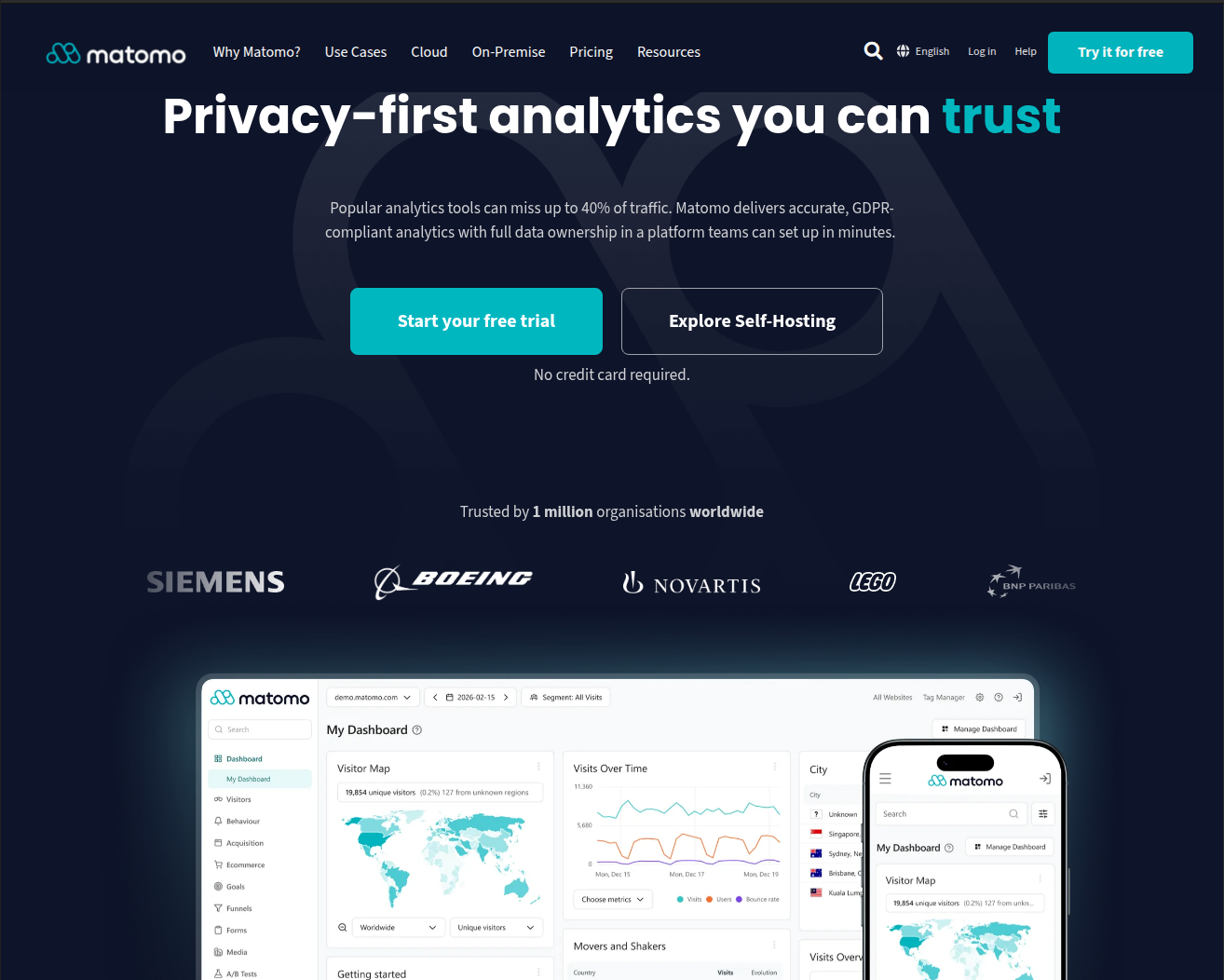
Matomo is engineered for total data ownership and privacy, operating without tracking cookies. It is useful for deep visitor analytics, multi-channel attribution, and e-commerce in a self-hosted environment. It also features advanced behavior diagnostics like visual heatmaps and session recordings. These features help resolve user checkout friction and layout bugs.
Rybbit
Rybbit is a secure, self-hosted open-source tool and alternative to Google Analytics. It cuts Google's ad-tech entirely out of the loop. It is best for the finance and healthcare industries because it runs on an isolated VPS.
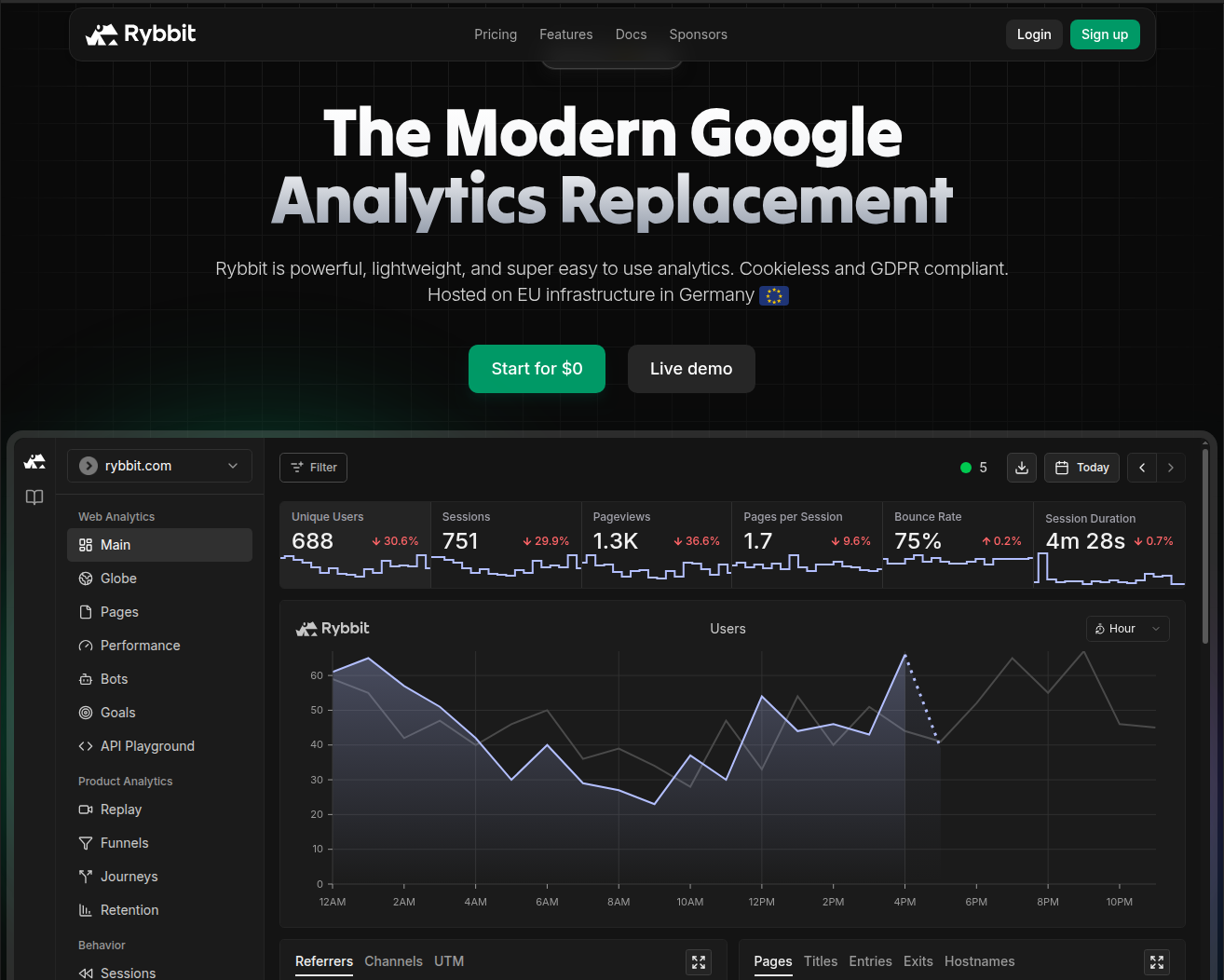
Rybbit is a privacy-based analytics platform. It provides cookieless web tracking and site performance monitoring without cookie banners. Its primary use is in automatically capturing interactions like clicks and form submissions. It also records user journeys and monitors core web vitals to optimize loading speeds.
GoatCounter
GoatCounter is an open-source web analytics platform and alternative to Google Analytics. It is designed as a lightweight, cookieless, and GDPR-compliant alternative to Google Analytics. Instead of Google Analytics's massive JavaScript library, GoatCounter can be implemented via a simple 1px tracking image.
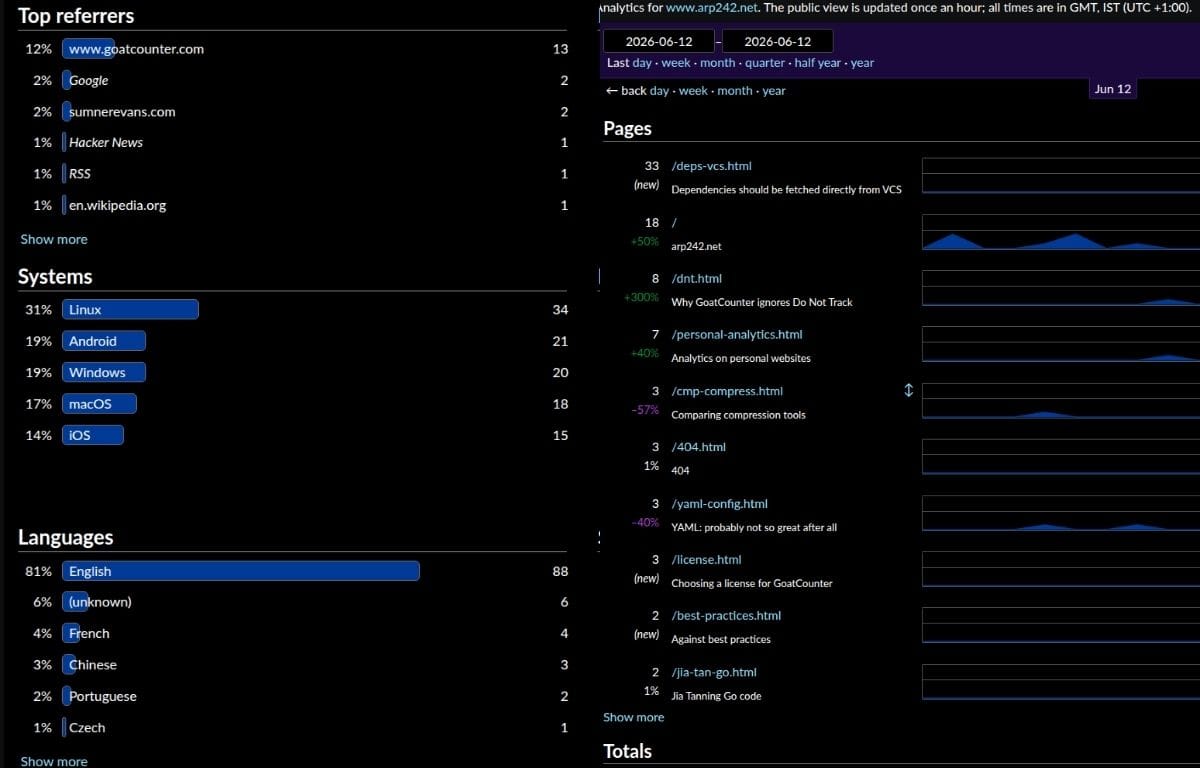
GoatCounter features path-focused dashboards. It is best used for your business for tracking meaningful statistics, eliminating cookie banners, maintaining high performance, and flexible deployment. Developers can use it as a hosted SaaS. It tracks page views, referrers, campaigns, visitor locations, browsers, and screen sizes in one place. It does not track personal data or use cookies, meaning it complies with GDPR and CCPA without requiring a cookie consent banner.
Ackee
Ackee is a beautiful and simple website analytics tool built on Node.js, GraphQL, and MongoDB. It is a self-hosted replacement for Google Analytics. This tool is perfect for personal websites and portfolios. You can easily set it up using Vercel or your own Node server.

It collects essential data such as page views, visit duration, geographical location, browser type, operating system, and hardware details in one place, making it easy to analyze data. It also offers focused event tracking for interactions like button clicks via a minimal interface. Your developers can easily fetch analytics data directly into internal business tools, custom CRM platforms, or client dashboards, which is helpful for your business.
Open Web Analytics
Open Web Analytics is an open-source website tracking tool built using PHP and MySQL. It is an alternative to Google Analytics. This tool is perfect for you if you are using older PHP websites and want to integrate tracking directly into your existing system without relying on outside services.
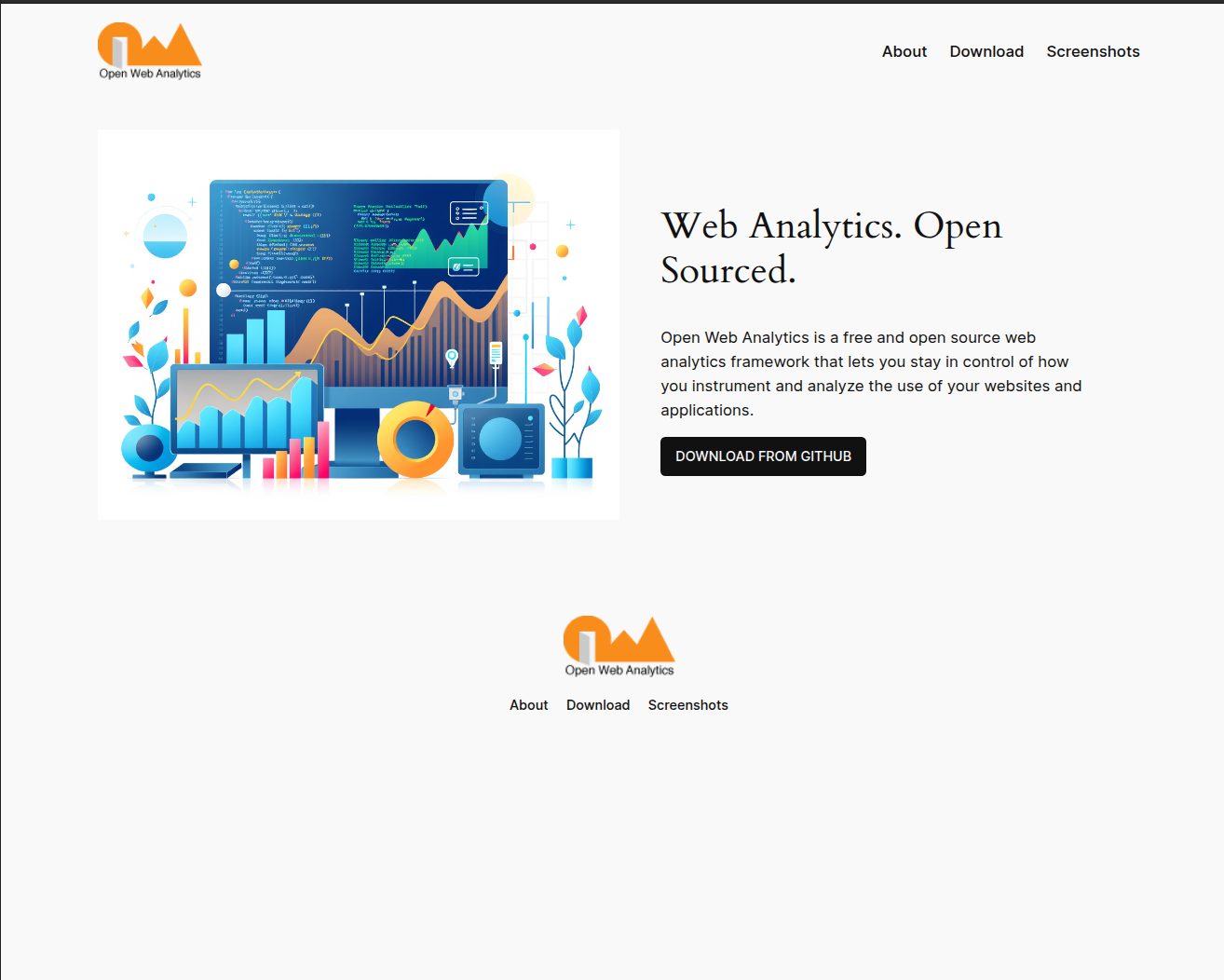
Open Web Analytics is designed for 100% data sovereignty. Because it is self-hosted on your own infrastructure, your enterprise maintains complete control over raw data. It allows users to track website traffic, e-commerce, and user behavior, providing full control over data ownership. If you are not physically present, its session replay recording feature is useful for you. It provides developer-first tools, including a REST API and PHP SDK.
Tianji
Tianji is a free, open-source alternative to Google Analytics. It is designed for web analytics and server monitoring. Using this tool, you can monitor traffic and uptime on one screen. It is built as the ultimate indie-hacker tool. You can use Docker to deploy the system once.

Tianji is an all-in-one observability platform. As a developer, if you want to monitor your page views and server health simultaneously, Tianji is the best choice for you. It tracks page views, user locations, and referrers without using cookies. This gives you complete GDPR and CCPA compliance without frustrating users with cookie consent banners. It features instant alert routing to tools like Slack and Telegram, which is great for you. It collects real-time server infrastructure diagnostics, including CPU and RAM usage.
Vince
Vince is a lightweight, open-source web analytics tool built on a single Go binary. Built in Go, it acts as a streamlined, single-binary port of the Plausible Analytics dashboard. It uses Compressed Roaring Bitmaps for incredibly fast query speeds.
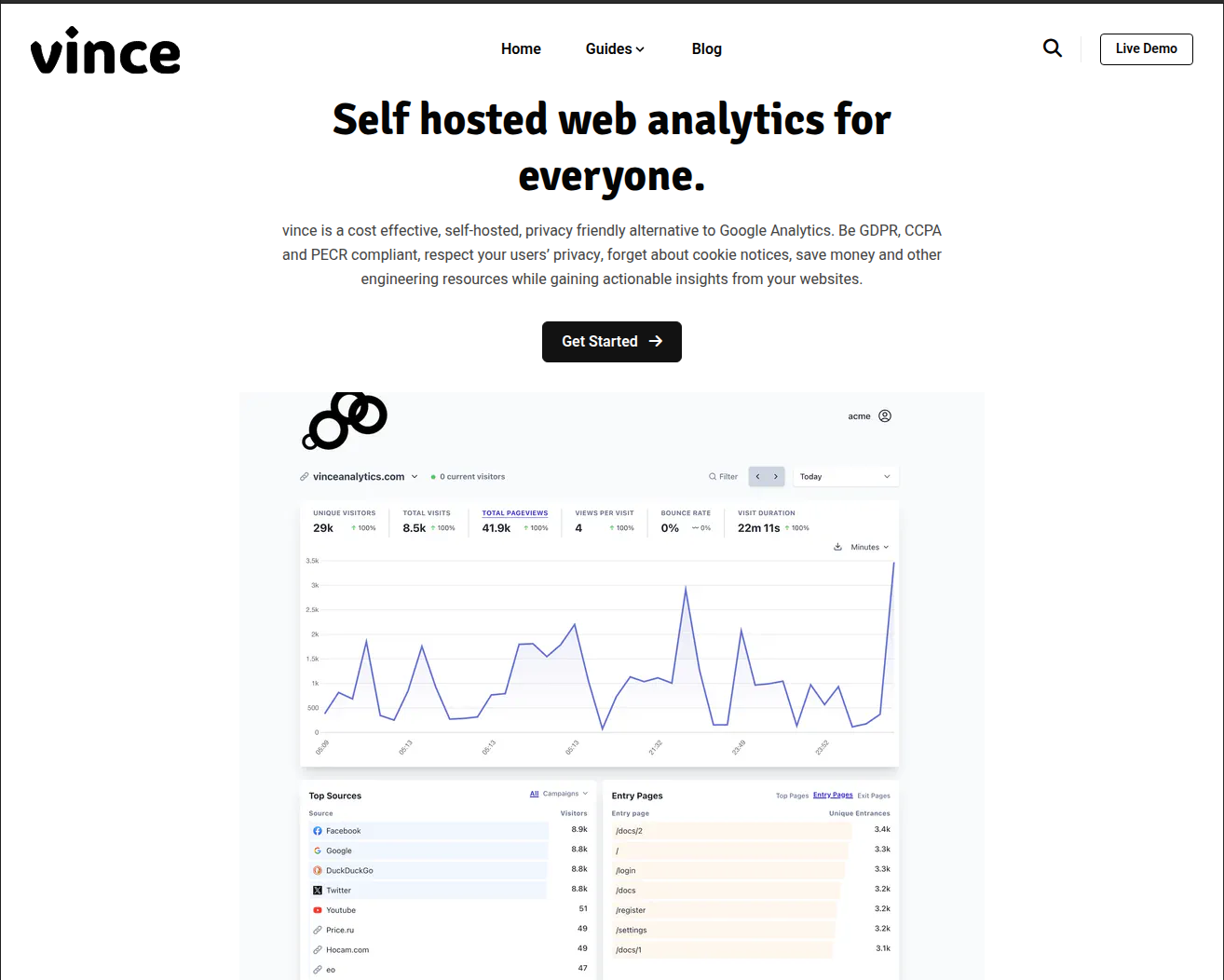
Vince is best for tracking built-in interactions. It offers a lean dashboard to monitor traffic data across unlimited websites, allowing you to watch all traffic on your website. It tracks website visitors, referrals, outbound links, file downloads, and 404 pages without using any tracking cookies. This keeps your site fully GDPR, CCPA, and PECR compliant without needing invasive cookie banner popups.
Litlyx
Litlyx is an open-source, privacy-first analytics platform that serves as an alternative to Google Analytics. It uses TypeScript and Vue with an embedded AI data layer, allowing your teams to track metrics and user behavior without compromising visitor anonymity.
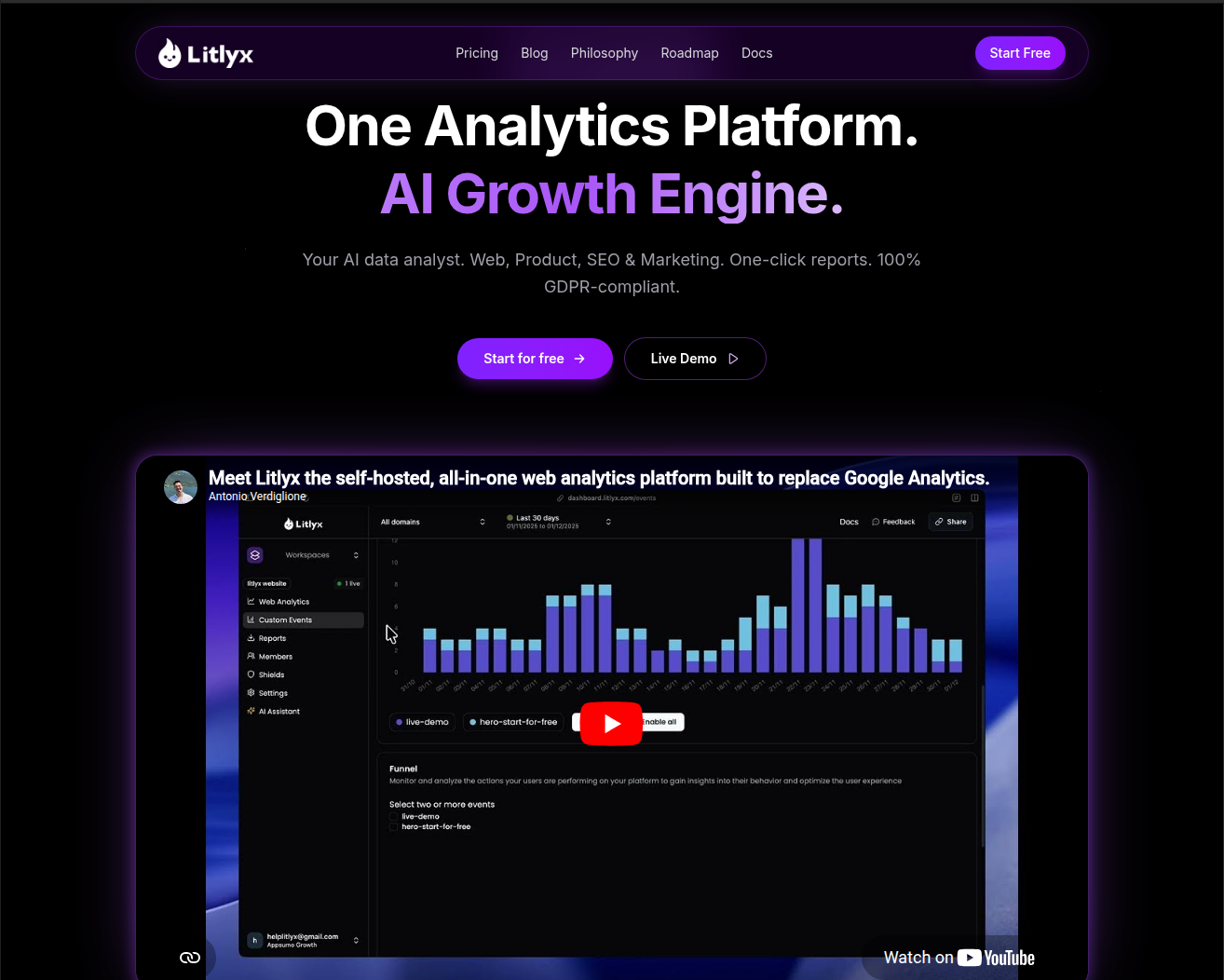
Litlyx provides GDPR-compliant, cookie-less tracking. It features real-time custom event monitoring, including an AI-driven dashboard for natural language data analysis. If you are a non-technical user, Litlyx's features help you track business goals. You do not need to know SQL or navigate multi-layered filter menus. You can literally type a query like "Show me a chart of our top traffic sources this week," and the AI instantly generates the visual report for you. This feature is great for any non-technical user.
Tirreno
Tirreno is an open-source security framework. It is designed to act as armor for a newly isolated data warehouse. It does not directly replace Google Analytics. Its primary utility lies in securing custom analytics stacks by locking down tracking endpoints from malicious injection.
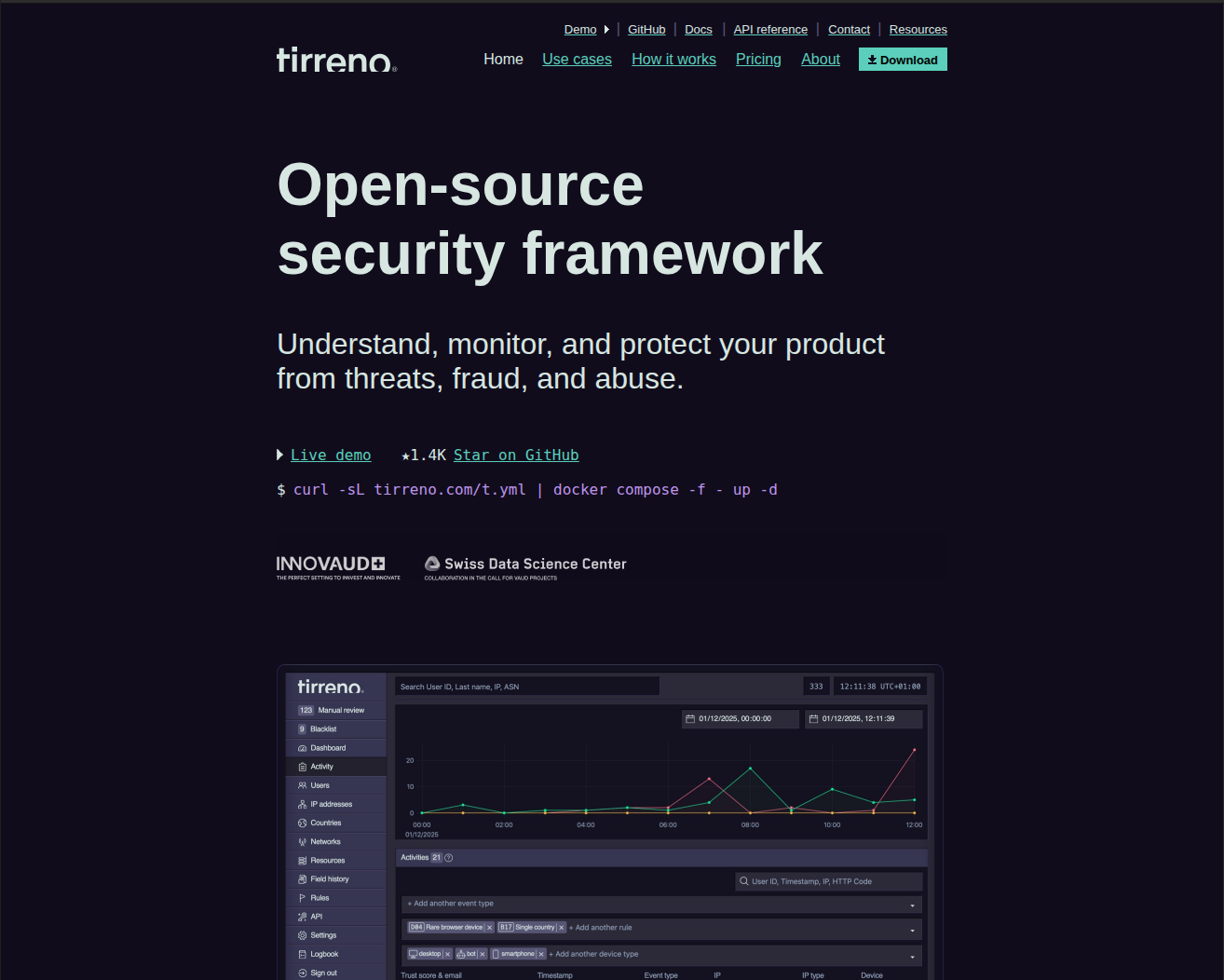
It achieves this through application-level monitoring and behavioral risk scoring. Its primary utility lies in tracking account takeovers, API fuzzing, bot scripts, and credential stuffing via a programmable rule engine and dynamic mitigation queues. It ensures strict data sovereignty with an on-premises architecture. It provides tamper-evident logs for audit requirements. It integrates quickly into backends using server-side SDKs.
Swetrix
Swetrix is a fully open-source, cookieless web analytics engine. Its primary utility lies in tracking privacy-focused web metrics. This web analytics platform can be used to monitor website traffic, track user behavior, and audit site technical errors without collecting personal data.
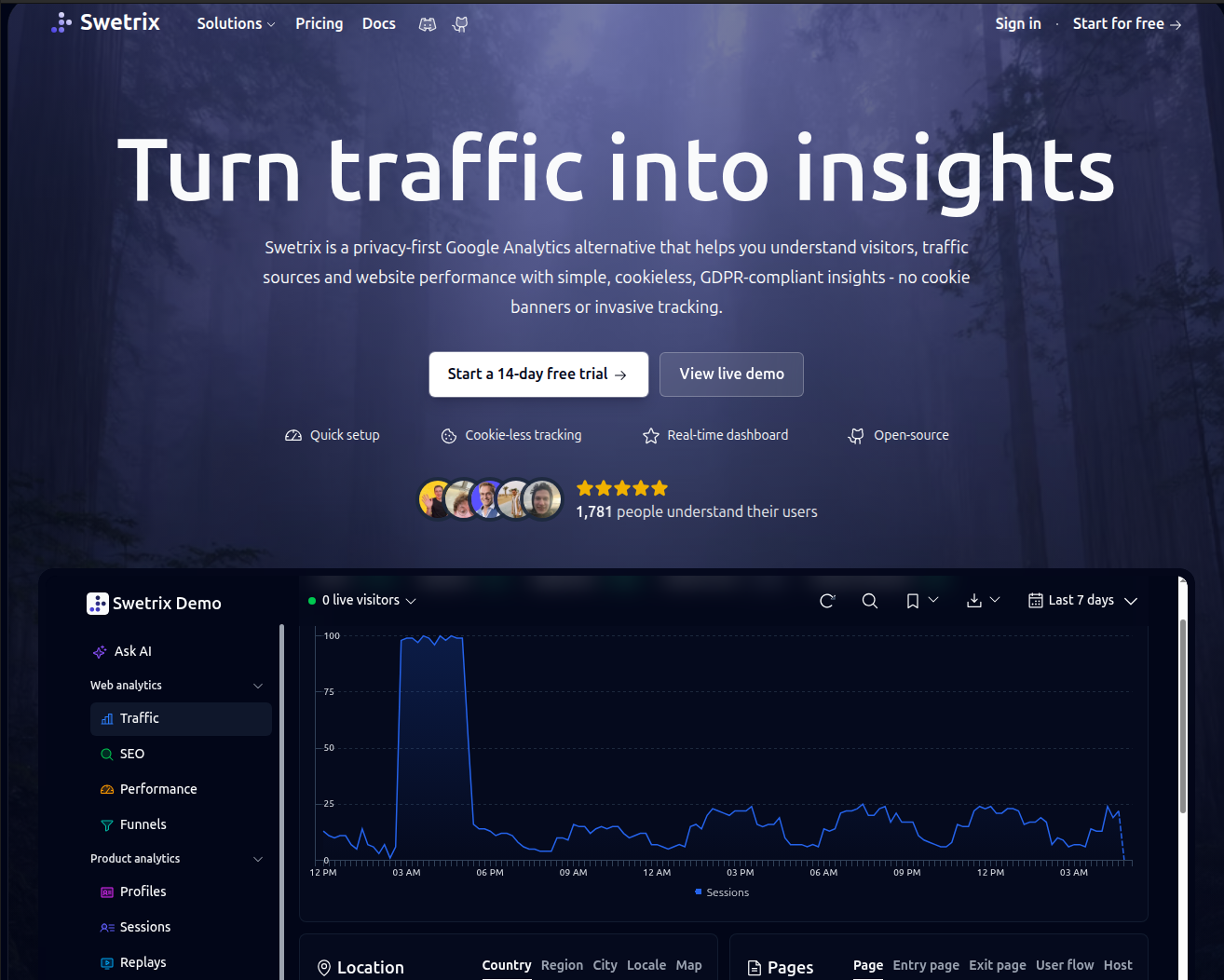
Swetrix acts as a mini-Sentry by automatically logging JavaScript crashes and breaking down which browsers, devices, or pages are experiencing bugs. For your business, this tool provides features like GDPR-compliant marketing tracking, real-user performance monitoring, automated front-end error tracking, user navigation flow visualization, and infrastructure alerting. Whenever your website experiences a traffic spike, a sudden crash, or a custom event failure, Swetrix sends automated push alerts directly to Slack, Discord, Telegram, or webhooks.
Medama
Medama is a self-hosted, open-source, ultra-lightweight web analytics tool. It acts as the anti-Google Analytics. The best way to use it is to run it on a Raspberry Pi or on the smallest VPS you can find. It consumes almost zero resources.
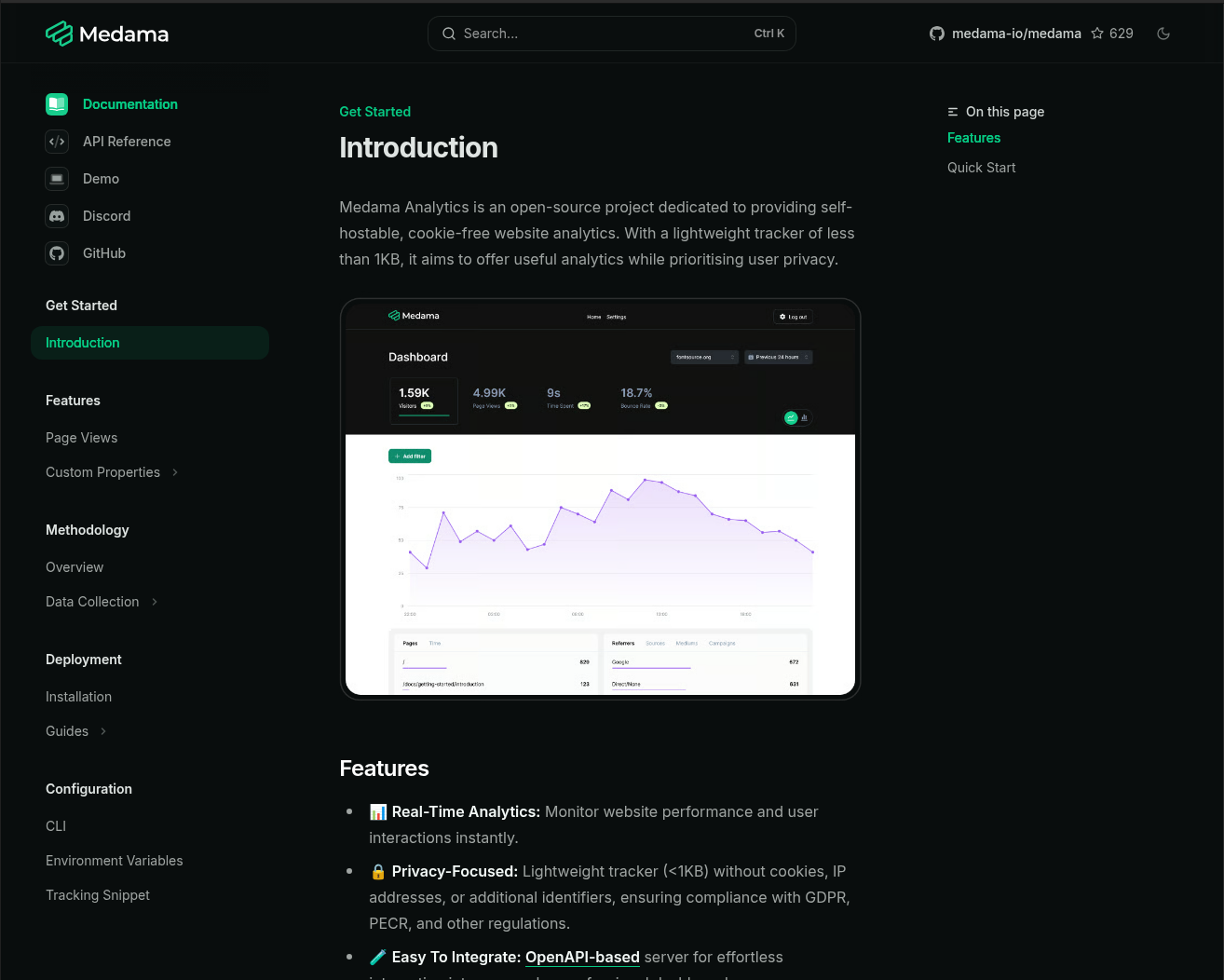
Medama has no official "click-and-pay" SaaS cloud version, meaning you must pull the releases and handle your own server updates. It uses a single-binary setup alongside embedded SQLite and DuckDB file databases. It is built in Go as a single compiled binary with no external database dependencies. It was built specifically for developers who want maximum server efficiency and absolute data privacy. This tool provides real-time traffic statistics.
PoeticMetric
PoeticMetric is an open-source, privacy-first alternative to Google Analytics. It allows you to collect essential traffic insights without utilizing cookies or personal visitor data. It is ideal for public build-in-public startups.
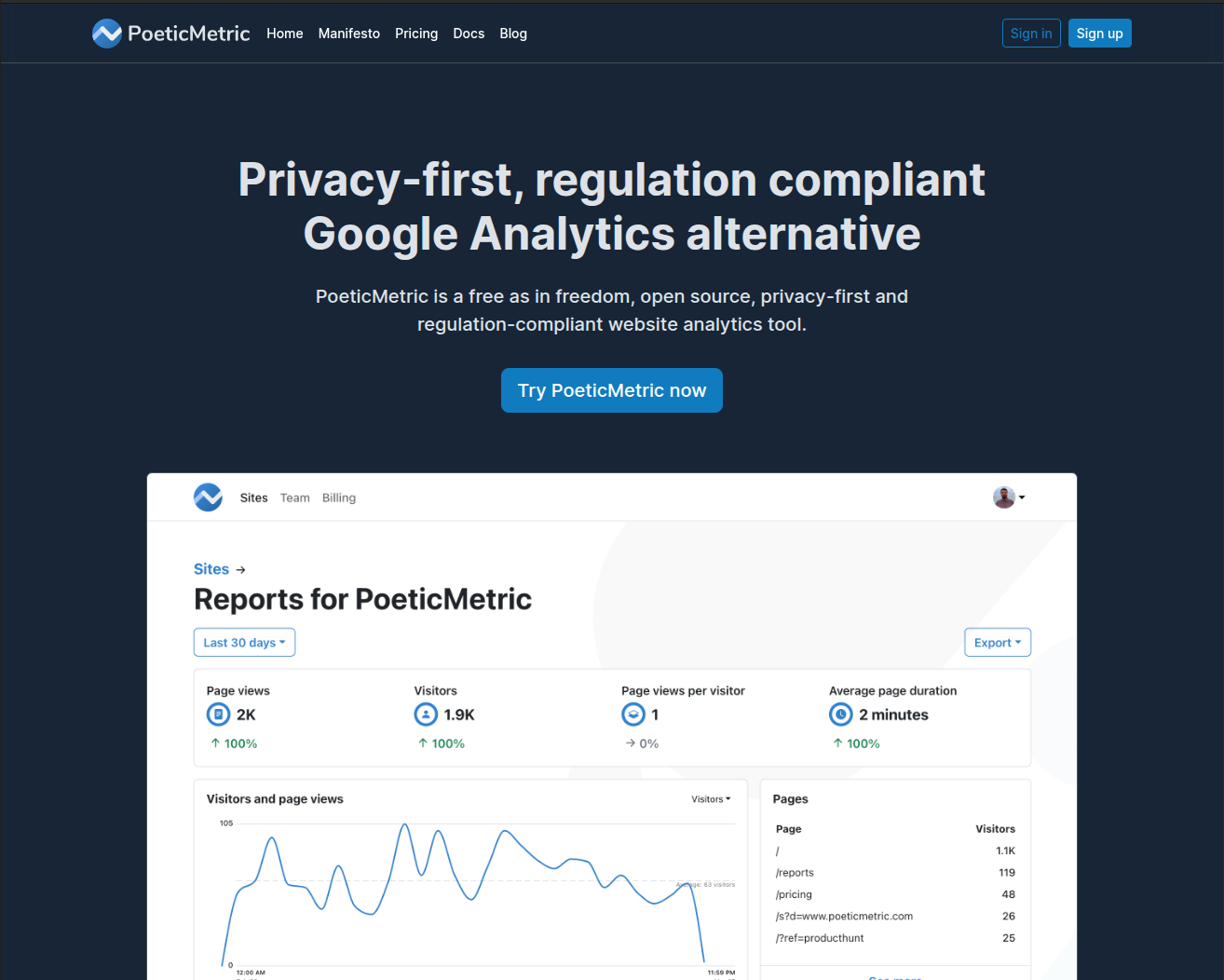
PoeticMetric's primary utility lies in providing core web metric reporting and multi-site management. These tools include custom goal tracking, funnel analysis, and website visual heatmapping. The best use cases for PoeticMetric are zero-banner marketing tracking, simplified multi-framework dashboards, verifiable data sovereignty, low-maintenance self-hosting, and public metric sharing.
Liwan
Liwan is an open-source, privacy-first web analytics platform and an efficient alternative to Google Analytics. Liwan is highly useful for your business if you prioritize website conversion rates, brand reputation, and zero legal overhead. It delivers clean traffic metrics while keeping your website fast and legally compliant.
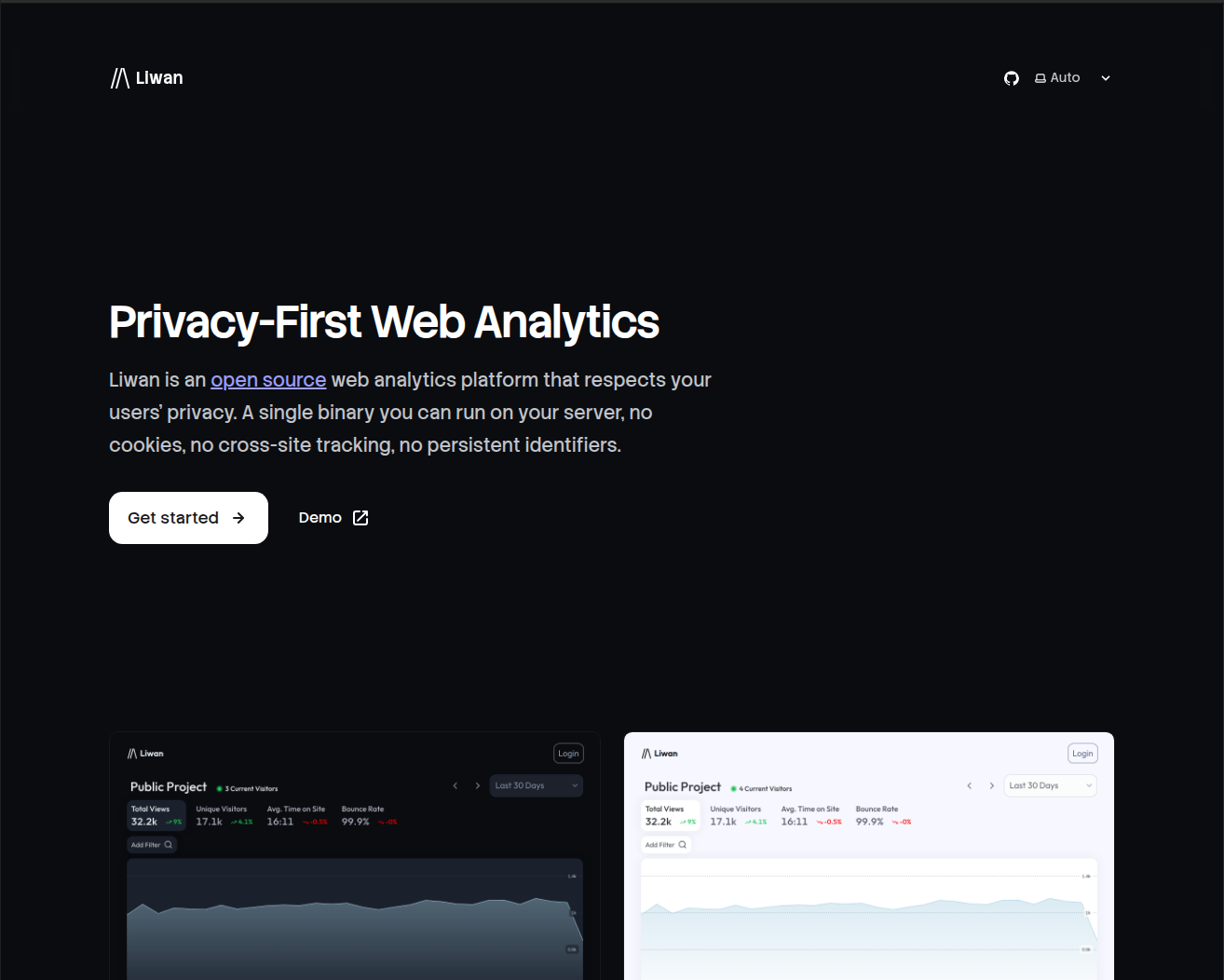
Liwan features real-time dashboard syncing. Its primary utility lies in utilizing single-binary execution and embedded DuckDB storage. Since Liwan does not collect personal data or use cookies, your business can completely remove GDPR/CCPA cookie consent banners. Using this platform, you can track millions of page views on a cheap $5/month Linux server.
Self-Hosted Metrics
Self-Hosted Metrics is an agnostic telemetry backend and an alternative to Google Analytics. It is ideal if you build CLI tools, desktop apps, or self-hosted software and want to track real-world usage.
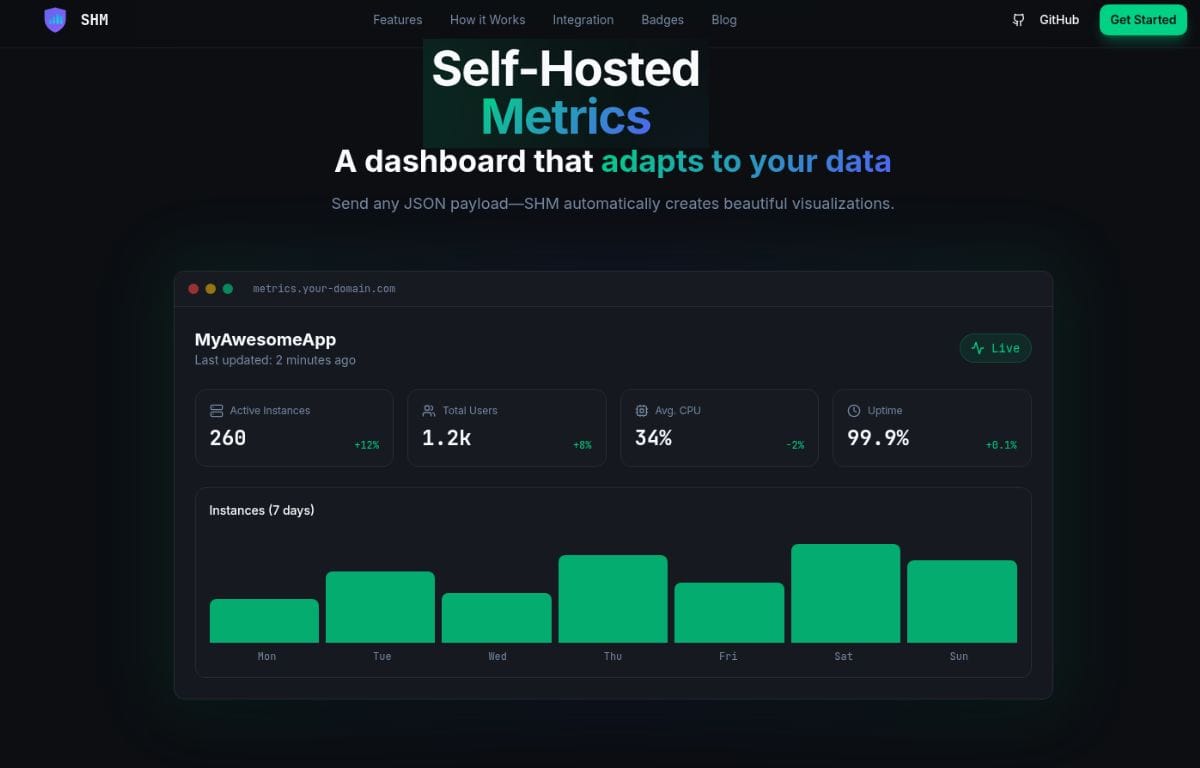
This platform is best for you if you want absolute data privacy, zero regulatory compliance liabilities, and reduced software overhead. It is also helpful for your developers for tracking active software instances and monitoring business health. It ensures secure data handling using cryptographically signed JSON payloads. You can connect business intelligence tools directly to your self-hosted database to build unified corporate dashboards that merge website traffic with your revenue metrics.
Conclusion
Google Analytics is overkill for most people. It is a privacy nightmare for everyone. Whether you need the massive product-tracking power of PostHog or the microscopic, one-pixel footprint of GoatCounter, there's a self-hosted engine built for your exact stack. Pick your tool, kill the cookie banners, and finally own your data.
