
Many founders and software developers are feeling completely overwhelmed by the continuous monthly fees they pay for digital tools and services. It has now gotten so expensive that people are looking for another option. These business owners are realizing that they spend more money every single month on basic technical infrastructure and platform services. Instead, they can buy a simple virtual private server, which is commonly called a VPS, for just $15 a month. This cheap server is fully capable of running the same software applications.
This shift is happening because the free, community-built software tools available today have become incredibly powerful, reliable, and user-friendly. Here is the definitive guide for building a production-ready, self-hosted SaaS stack today.
Ditching the Nginx Configs (The Platform Layer)
Back in the day, managing your own servers meant messing around with reverse proxies and breaking your Docker Compose files. I don't miss that at all. Today, you just need a solid control plane.
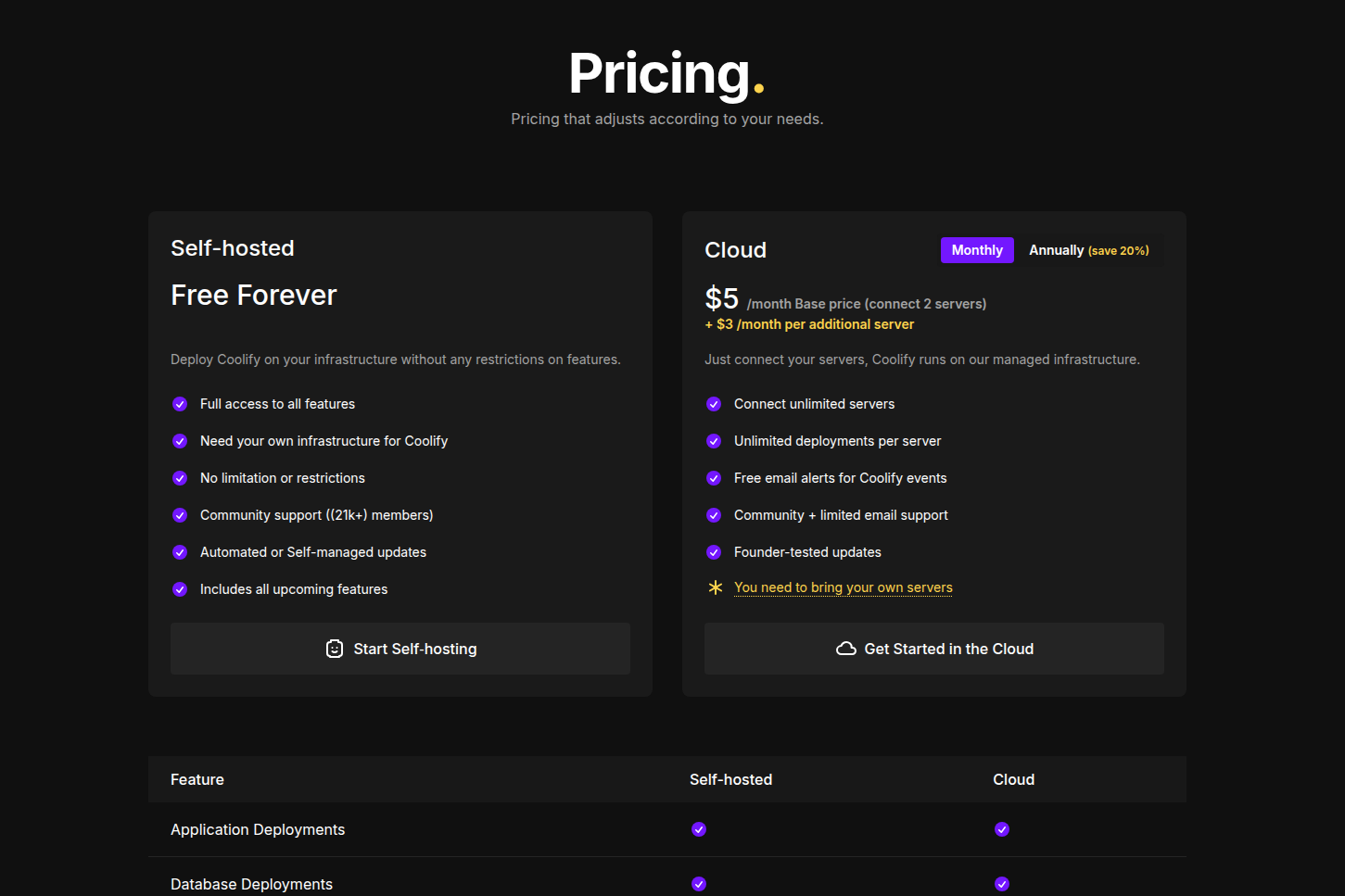
For me, Coolify is the best choice right now. Think of it like having your own personal Vercel on a server you actually own. It handles all the Let's Encrypt SSL certs automatically, gives you one-click database setup, and when you push code to GitHub, it auto-deploys. It just works. Coolify's pricing is shown in the image below.
If you are building a massive enterprise business that spans across multiple servers, then CapRover is worth looking into. CapRover is a free, open-source Platform as a Service that runs on Docker Swarm and easily handles heavier distributed loads without breaking a sweat.
Stop Overpaying for Databases
Please stop giving your money to managed database providers before you have real traffic.
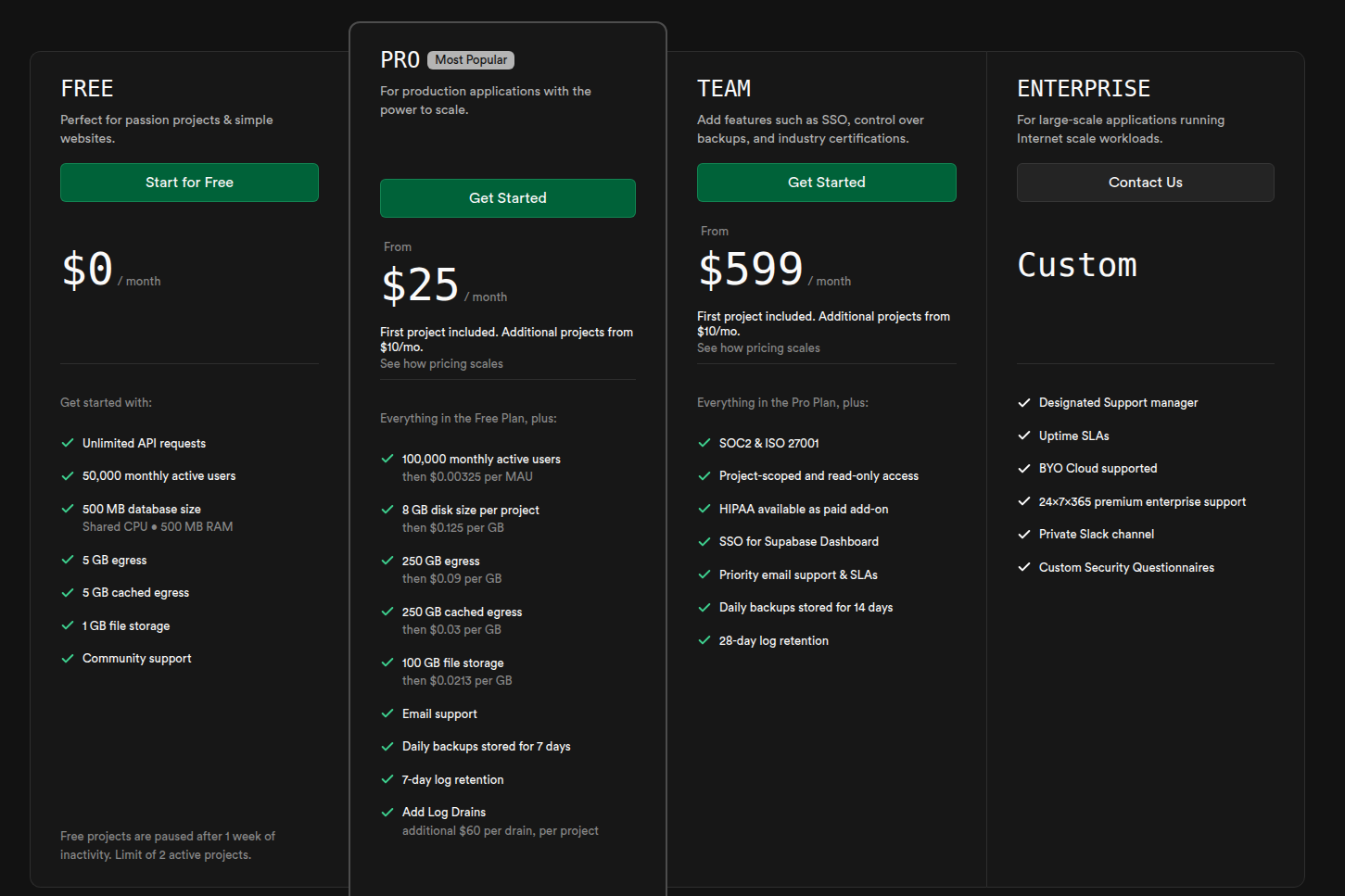
Supabase has basically become the open-source Firebase killer. When you spin it up, you instantly get a full Postgres database, edge functions, authentication, and realtime subscriptions. Supabase's pricing is shown in the image below.
On the other side, if you're building something smaller, you have to check out PocketBase. PocketBase is an open-source Backend-as-a-Service (BaaS). It's a single-file backend running on SQLite. It handles thousands of users easily, and takes pretty much zero configuration to get running.
Product Analytics
We all want to know what our users are doing today. But paying usage-based pricing or handing all your customer data over to Google isn't a great trade-off.
If you need serious product analytics, I highly recommend PostHog. If you host it yourself, you get session replays, feature flags, A/B testing, and funnels without the insane SaaS bill.
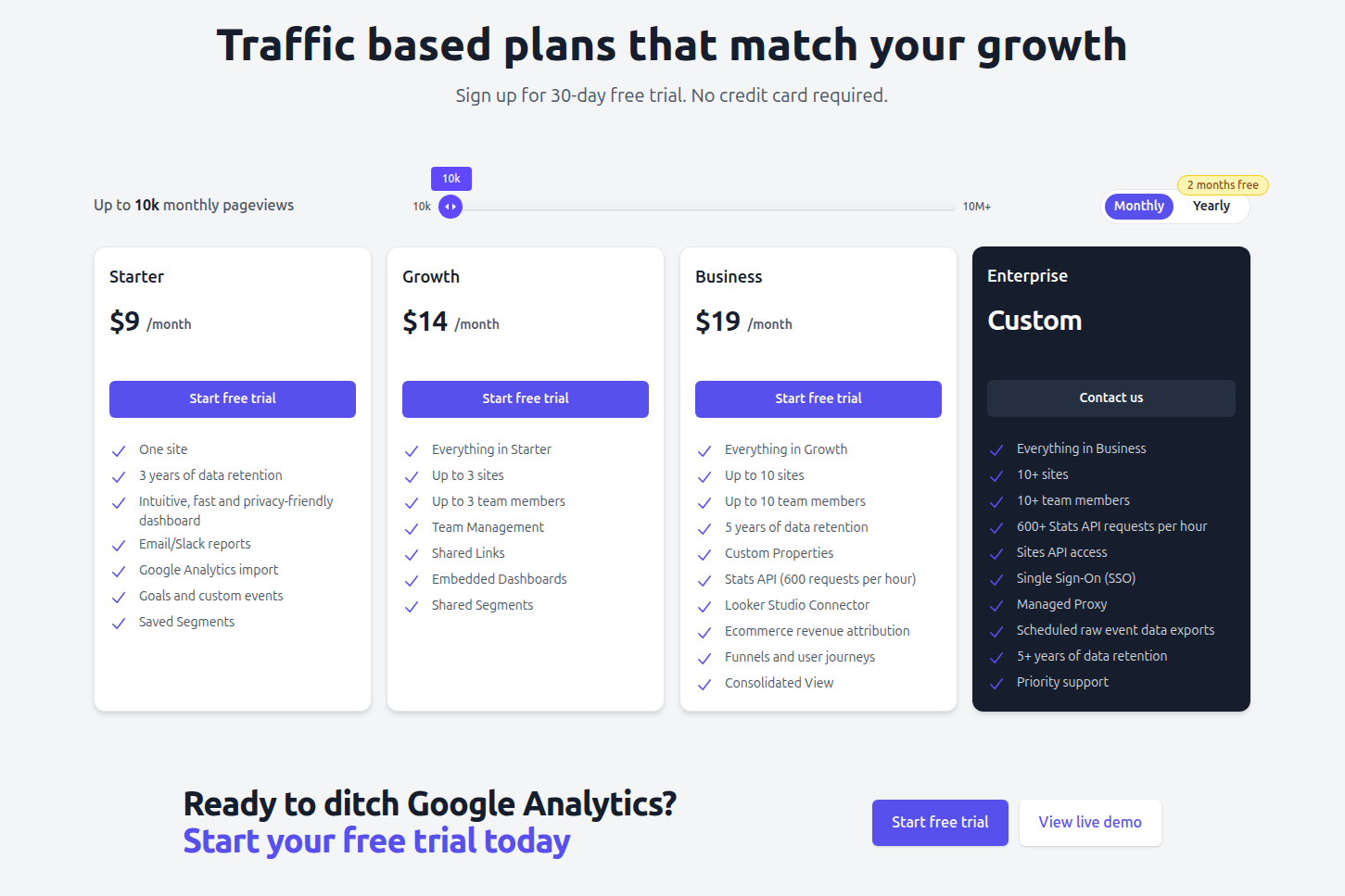
If you just want simple web traffic stats, Plausible is best. It's super lightweight, actually respects user privacy, and won't bog down your frontend performance. Plausible's pricing is shown in the image below.
CRM & Email
Nothing scales your monthly burn rate faster than live chat software and email marketing lists.
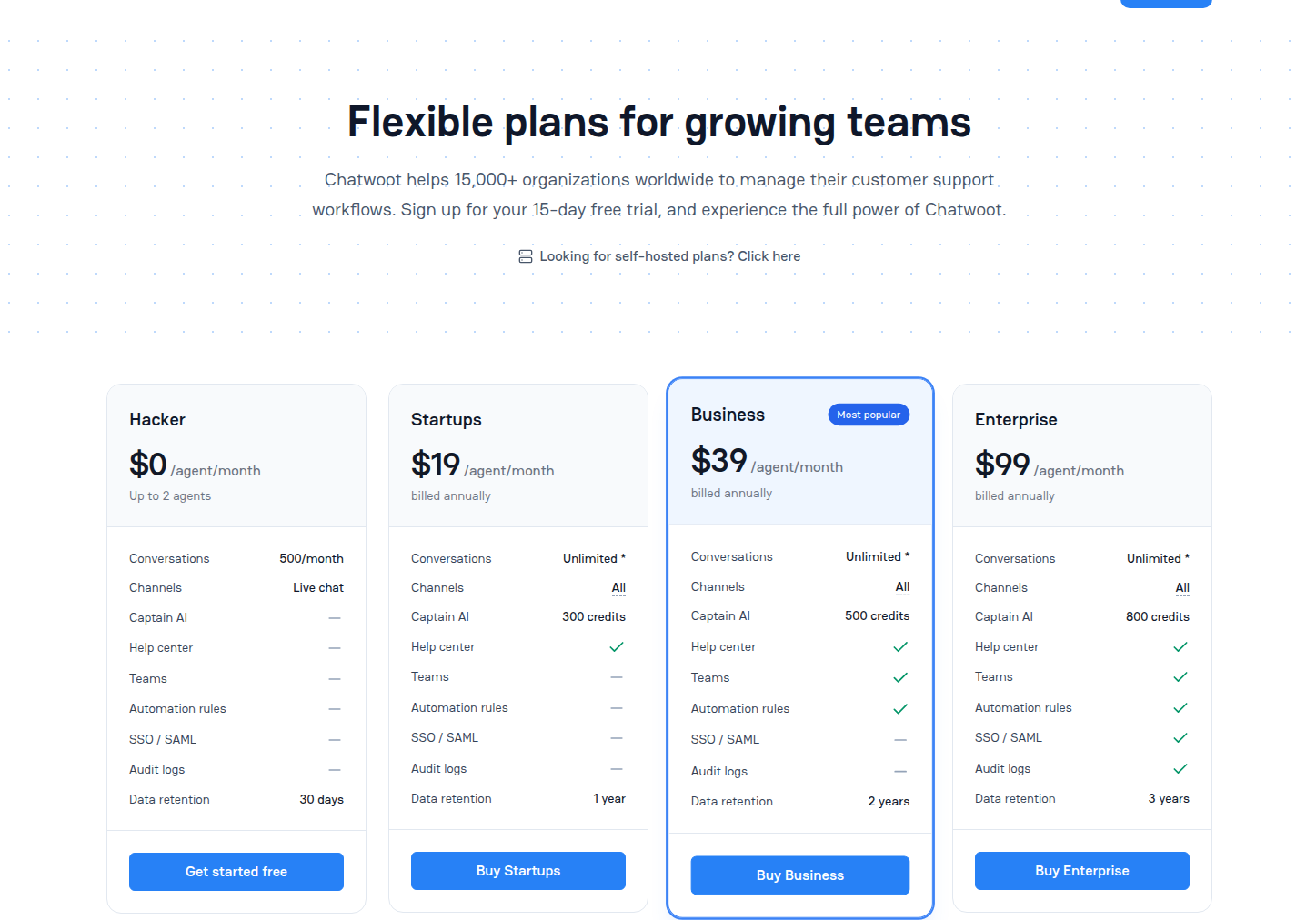
Chatwoot is a powerful alternative to Intercom that handles live chat widgets, chatbots, and shared team inboxes. While they charge $19/month per agent for their cloud version, they offer a Community Edition that is 100% free and open-source. By self-hosting it on your own $10 server, you get all those seats for free without falling into the per-seat pricing trap. Chatwoot's pricing is shown in the image below.
Listmonk is an absolute beast for newsletters. It is 100% free and open-source under an AGPL license, they don't even offer a paid cloud version. It's incredibly fast, and the only thing you pay for is the AWS SES or Mailgun service to actually send the emails out. You'll save thousands compared to sticking with Mailchimp.
Conclusion
In the modern day, the old excuse that "self-hosting is too hard" just doesn't hold up anymore. The friction is gone, the tools are beautiful, and communities building self-hosted SaaS are moving faster than the enterprise dinosaurs. Our business models finally have a viable way to run high-performance software without paying large fees to cloud providers.
